- Intent
- Visual companion hub
- Characters
- Fictional adults
- Privacy
- Private by default
- Signup
- No card
AI-use disclosure
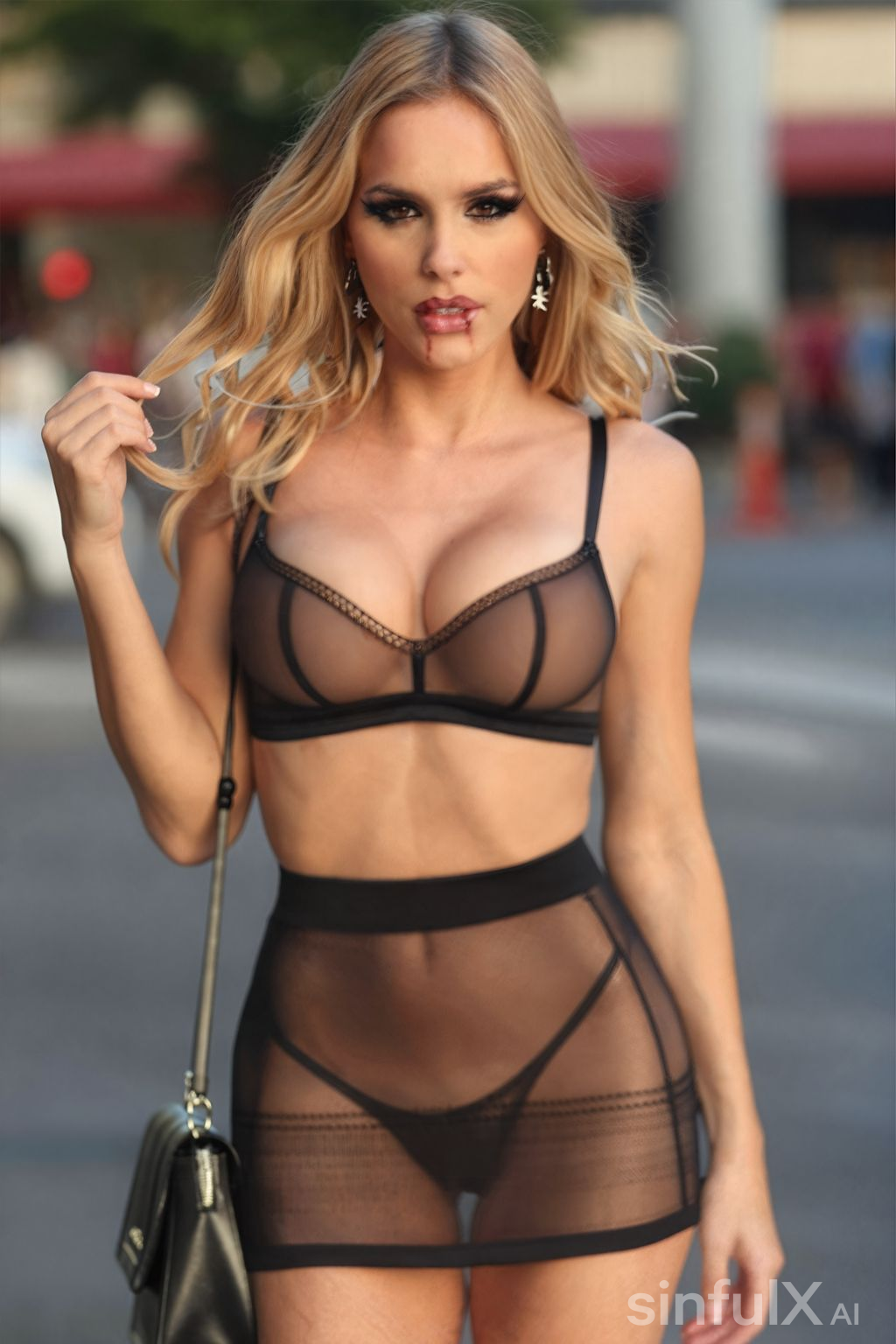
Sample media on this page is AI-created fictional adult content from the SinfulX pipeline, not real performers.
Trust and safety
SinfulX is for adults only. Outputs are fictional AI-generated adult content. The platform does not support deepfakes, real-person targeting, celebrity prompts, face swap, or undress workflows. Respect consent and local laws.
no credit card to sign up
Build your fictional AI companion. Same face, every scene. No credit card.
No credit card · Private gallery · Fictional characters only

A visual companion that looks the same every render
The phrase gets used loosely. It can mean a text chatbot with an avatar, a voice-only companion, or a visual platform. SinfulX is the third kind. You pick a fictional persona from the roster, the platform anchors her face with a per-character LoRA, and every subsequent render holds her identity stable across category, outfit stage, and framing. There is no chat layer and no conversational memory; what we lock instead is visual continuity. The companion in your lingerie portrait is the same face, the same body, the same skin tone in your kitchen scene and your bedroom scene three weeks later.
That single guarantee is harder than it sounds. Generic diffusion stacks drift between renders because the model has no anchored identity, only a prompt. Even purpose-built companion apps that bolt image generation onto a chat product run their image model independently from their text persona, so the woman in the photo does not visually match the persona you have been chatting with. Browse the AI persona roster, lock a fictional companion such as Alice, and carry that face across every render, including soft lingerie scenes and full-scene oral or anal framings, with no identity drift between generations.
VIZ Tokens
Lock In Your First Companion Render
Pick a fictional persona, lock her face with a per-character LoRA, and render in 4K. no credit card to sign up, no credit card, same pipeline as paying users.
20+
Fictional personas
100+
Scenario presets
4K
Image resolution
<30s
Render latency
What a fictional AI companion actually is in 2026
Strip away the marketing and a custom-built AI companion is two things stacked together: a fictional persona, and a rendering system that holds that persona stable across visual outputs. The persona is the cluster of look, vibe, and backstory. The rendering system is whatever pipeline turns text prompts into images and video while keeping the persona looking like herself from one generation to the next.
Most platforms in this category fall into one of three buckets. Text-first apps such as Replika, JanitorAI, and character.ai focus on long-form conversational companionship; their visual output, when it exists, is decorative and shifts between sessions. Hybrid apps such as Candy.ai, DreamGF, Selira, and Nomi run a chat model alongside a separate image model, where the persona has a system prompt for text and a checkpoint for images, and the two layers do not share visual state. Visual-first platforms such as SinfulX skip the chat layer entirely and put the production budget into anchored visual identity: a per-character LoRA pinned to face geometry, skin tone, and body composition, applied to every render through a fine-tuned diffusion pipeline.
That third category is what most people actually mean when they search for an AI partner of their own design they can build and revisit. The output is a fictional character whose face you can recognize across a year of generations, not a fresh stranger every prompt.
How to build your AI companion in three taps
Pick a fictional persona
Open the persona roster and pick the face that lands. Each persona ships with a fixed visual anchor: face geometry, skin tone, hair color, body composition. Twenty-plus fictional personas are live, no two identical.
Pick a scenario
Choose a category preset: portrait, lingerie, bedroom, kitchen, oral, anal, cumshot, or any other framing in the catalog. The preset carries the persona LoRA into the new context without losing facial identity.
Press generate, iterate
Renders land in under 30 seconds at 4K. Regenerate three or four times for lighting and pose variation, save keepers to your private gallery. Twelve generations later you have a coherent visual identity for one fictional companion.
Why most AI companion tools get visual identity wrong
The defensible criticism of the current AI companion market is not about chat quality. It is about what happens when a user expects to see the same face twice. Three concrete failure modes recur across the category, and each one undermines the central promise of building a companion you can revisit.
Visual identity drift across renders. Generic diffusion stacks like base SDXL or Stable Diffusion 1.5 ship with no per-character anchor. The model treats every prompt as a fresh sample from latent space, so two generations of the same character produce two different faces with similar attributes. Even tools that wrap a system prompt around the persona ("a brunette with green eyes named Mia") cannot enforce facial geometry; the prompt is text, the face is pixels, and the connection is statistical. SinfulX trains a per-character LoRA per persona and applies it to every render, which pins the latent identity vector directly. The companion in your portrait and the companion in your cumshot scene share face geometry because the LoRA forces it.
Visual-conversation desync on hybrid apps. Companion apps that ship both chat and image generation typically run two independent models. The text persona has a system prompt and conversation memory; the image generator has a checkpoint and a prompt template. Nothing connects them at the embedding level. When you ask the chat persona to "send a photo of yourself," the image model receives a fresh prompt and renders someone who matches the description but is not visually consistent with prior images of the same persona. The result is a companion who looks slightly different each time you ask, even within a single session. SinfulX skips the chat layer and treats visual identity as the product, so there is no desync to manage; the persona you build is the persona you render, every time.
Personality drift in long-context chat. Text-only companion AIs face a different version of the same problem. A single system prompt, no matter how well-written, eventually loses against context-window pressure. After a few thousand tokens the persona starts behaving generically, forgets stated preferences, and reverts to default-assistant patterns. Replika and Nomi have invested heavily in retrieval and memory features to fight this, with mixed results. SinfulX takes the cleaner architectural position: we do not promise conversational memory we cannot keep, and we deliver visual continuity that we can keep, because the LoRA does not forget.
Ready when you are
Open the studio and pick a character
Photoreal renders in 4K, under 30 seconds, no-card signup.
What people actually build with a fictional AI partner
Three use cases dominate the audience, and they are worth naming clearly because the product fits some better than others.
The largest cohort is curated visual fiction. A user picks a fictional persona that matches their type, builds a coherent gallery across portrait, lingerie, and explicit framings, and revisits the same companion week after week. The experience resembles following a single fictional creator whose look stays consistent. Fiction writers and adult-content hobbyists use this pattern to develop characters for stories, scenes, and serialized projects. The second cohort is exploratory variety: users who churn through personas to discover a type they did not know they had, then settle on one or two anchors. The third cohort is private gallery building, often by users who already pay for several traditional adult subscriptions and consolidate down to a single AI account that covers every long-tail scenario without the per-creator paywall.
Honest counter-cases: users who want real-time emotional dialogue should look at Replika or character.ai and accept the personality-drift tradeoff. Users who want to chat with a specific real performer should not be on any AI companion platform; that is a parasocial fan relationship, not an AI use case. Users who want a slider-based character editor that designs a face from scratch are early; that tooling is in research today and not at the consumer surface anywhere yet.
SinfulX vs Candy.ai vs DreamGF vs Replika
These four platforms share a search neighborhood but solve different problems. The honest comparison:
| Dimension | SinfulX | Candy.ai | DreamGF | Replika |
|---|---|---|---|---|
| Primary surface | Visual generation | Chat + image | Chat + image | Chat only |
| Visual identity anchor | Per-character LoRA | Prompt template | Prompt template | N/A (no adult imagery) |
| Identity drift across renders | Locked | Variable | Variable | N/A |
| Adult video output | Yes, 1080p clips | Limited | Limited | No |
| Photo upload accepted | No | Varies | Varies | Limited |
| Free tier | VIZ tokens, no card | Limited messages | Limited tokens | Yes, no adult tier |
Pick by use case, not by brand affinity. If you want a chat partner with light visuals, Candy.ai or DreamGF cover that surface. If you want a non-adult companion focused on long-form text, Replika is the mature option in that lane. If you want a visually consistent fictional companion you can render across every scenario without identity drift, SinfulX is built for that.
The full visual catalog around your companion
Once a fictional persona is locked, the rest of the catalog reads as scenes for one consistent character. Open with a soft lingerie portrait to confirm the persona renders the way you want, switch into the scenario library to see what is available, and lead into explicit framings as you go. Common sequences include a oral scene for the lead-in, then movement into full-scene sex framings or anal positions, with optional close-ups in pussy detail or finishing on a cumshot. The persona stays visually identical across every category because the LoRA does the work; the only thing changing is the scenario preset and the framing.
The companion vertical also touches sister territory. The consistent characters page documents the LoRA pipeline that powers visual identity continuity. The privacy-first guide covers how generations are stored, who can see them, and the discreet billing setup. The ethical case for AI adult content explains why a fictional persona avoids the consent failures that traditional adult media has been documenting for decades. For broader context on the medium, the AI porn vs real porn comparison walks through cost, regulation, and aesthetics across the two production models. If you want a generic companion-adjacent vertical, the AI MILF generator covers older fictional personas with age-coherent skin and posture, and the general AI porn maker is the broadest catalog entry.
Pricing and access
SinfulX runs on VIZ tokens, the platform currency. New accounts sign up with no credit card. Membership unlocks multiple personas across portrait and lingerie scenarios so you can decide whether the visual quality matches what you want. Paid renders use the same pipeline, with the standard watermark and no resolution cap.
Heavier use moves to either a one-time bundle or a recurring plan. Bundles are pay-as-you-go top-ups with no recurring billing. The recurring plan adds priority queueing during peak load and a higher monthly token allocation, with a cancel-anytime policy and no fees on cancellation. Full pricing and current promotions live on the VIZ tokens page; billing descriptors are discreet and unlinked to the platform name.
Privacy by default
Renders go to a private gallery scoped to your account. Nothing is published, shared, or surfaced anywhere else without an explicit publish action. Storage is encrypted at rest, no third-party tracking pixels run on the platform, and the data-retention policy lets you delete generations and the underlying account permanently from the settings panel. Billing descriptors are discreet, unlinked to platform name, so card statements do not reveal the service. None of your generations are used to train future models, and there is no community-feed surface where private renders can leak by accident.
What this is not
- Not a human replacement. A fictional AI companion is creative entertainment, not a substitute for a partner. The relationship is parasocial by design, and we do not pretend otherwise. Use it as visual fiction.
- Not a chatbot or text companion. SinfulX has no chat layer, no conversational memory, no dialogue product. If you want long-form text companionship, Replika and character.ai live in that lane; we do not.
- Not a deepfake tool. Photo upload is mechanically refused at every endpoint. Identity-similarity detection blocks prompts that target real-person likenesses. Every persona is fictional and synthetic.
- Not a slider-based character creator. You pick from 20+ fixed fictional personas and customize scenario, outfit, and framing around them. From-scratch face design is not yet a consumer feature anywhere.
- Not a real-person-roleplay platform. Prompts that try to encode a real performer, celebrity, or named individual are flagged and refused. Companions are unambiguously fictional.
Sample companion renders from the SinfulX roster






Start Generating
Build Your Visual Companion Today
no credit card to sign up. Pick a fictional persona, lock her face with a per-character LoRA, render across every scenario in 4K.
Keep Reading
Related Guides
AI Porn Gallery - Browse NSFW AI Examples | SinfulX
AI porn gallery of curated fictional NSFW AI examples. Browse categories, compare quality, then generate privately. No-card signup. 18+ only.
Read guideHow to Make AI Porn - Real Walkthrough | SinfulX
A real walkthrough of the SinfulX image-to-video flow: pick a fictional model, choose a scenario, render a private still, then promote the keeper to video.
Read guideSinfulX × Playboy: The Future of Fantasy Is Here | SinfulX
SinfulX is featured in Playboy magazine's Spring 2026 issue. Inside the Isabela / Angelique Rose digital-twin partnership, the director-chair platform philosophy, and what comes next.
Read guideCustom AI companion - frequently asked questions
A fictional AI-rendered companion built from a chosen persona, scenario set, and visual style. On SinfulX you pick from 20+ fictional personas, lock her identity with a per-character LoRA, and render her across lingerie, portrait, and full-scene framings in 4K under 30 seconds. She is a creative persona, not a real person and not a substitute for human relationship; the value is curated visual fiction, not human replacement.
Candy.ai and DreamGF lead on text-chat with bolt-on image generation, where the chat model and the image model do not share visual state. Replika focuses on long-form text companionship with no adult imagery on its current product. SinfulX is visual-first: a per-character LoRA locks face geometry and body proportions across every render, so the same companion appears identically in a portrait, a lingerie scene, and a full bedroom framing without identity drift.
Not from blank paper, no. You pick from a roster of 20+ fictional personas - Alice, Isabela, Capri, Luna, Ashley, and others - each with a fixed face anchor. What you customize is everything around the face: scenario, outfit stage, lighting, framing, and category. The result is a curated gallery that looks like your version of that persona, not a stock library and not a slider-based character creator.
Yes, visually. Per-character LoRA anchors face geometry, skin tone, hair, and body proportions across every generation. Render her in lingerie, then a kitchen scene, then a oral framing, and the face stays locked. SinfulX does not provide conversational memory between sessions, so this is visual identity persistence, not chat-state persistence; the persona looks identical across generations regardless of category.
No, and we are direct about that. A fictional AI companion fills a creative entertainment slot, similar to fiction or fantasy roleplay, not the slot of a human partner. Current research on parasocial AI companions suggests supplementation more often than replacement for the typical user. Use it as a curated visual outlet; do not treat it as a substitute for the work of human relationships, and the experience stays healthy.
No. Every persona is a fictional adult character anchored by a synthetic LoRA, not a real-world likeness. Photo upload is mechanically refused at every endpoint, so face swap and celebrity targeting are not possible on the platform. Identity-similarity detection flags any prompt attempting to encode a real-person likeness. Non-consensual intimate deepfakes became federally criminal in the US under the TAKE IT DOWN Act signed May 19, 2025.
New accounts get no credit card to sign up with no credit card required, enough to test multiple personas across portrait and lingerie scenarios. Heavier use moves to one-time bundles or a recurring plan with priority queueing on the VIZ tokens page. The free tier renders the same diffusion pipeline used by paying users, with the standard watermark and no quality downgrade on free generations.
Free to start
No credit card to sign up
Same diffusion pipeline as paid users, standard watermark, no quality downgrade.
Editorial review
SinfulX content pages are reviewed against current product behavior, privacy posture, consent boundaries, and moderation rules. Pages that claim original tests or data require supporting notes before publication.
Trust and safety
SinfulX is for adults only and does not support deepfakes, real-person targeting, celebrity prompts, face swaps, or undress workflows. Read the trust, safety, consent, and age policy.