AI-use disclosure
SinfulX publishes this guide and sells AI-generated adult content. The article argues from that position, while keeping the key distinction explicit: fictional adult AI output is not the same as deepfakes or real-person targeting.
Trust and safety
SinfulX is for adults only. Outputs are fictional AI-generated adult content. The platform does not support deepfakes, real-person targeting, celebrity prompts, face swap, or undress workflows. Respect consent and local laws.
Free to start
Open the studio in 3 taps — no card to sign up
No credit card. Photoreal stills in under 30 seconds, fictional characters only.
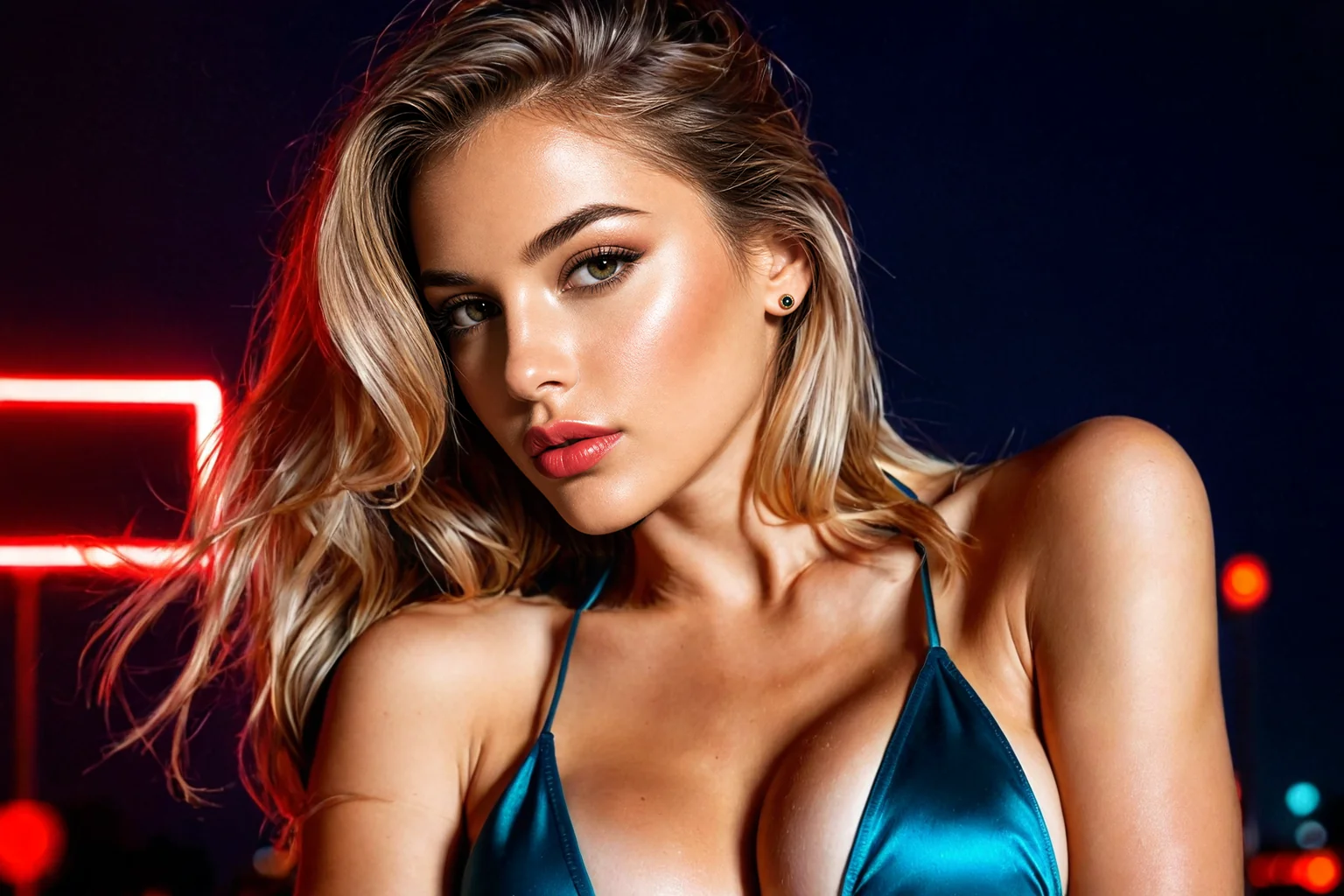
Ten years ago, "porn" meant logging into a tube site or a paid studio subscription to watch real performers. In 2026, a measurable share of the audience is shifting toward AI-generated adult content instead, produced on demand from latent diffusion models, with no camera and no performer in the pipeline. This guide walks through what is actually different between AI porn vs real porn across the dimensions that matter: consent, cost, privacy, regulation, and aesthetics.
Original SinfulX evidence behind this comparison
This comparison is not just a category essay. It maps directly to how the SinfulX product is built. The generation surface does not accept user photo uploads, so the common face-swap and undress workflow never reaches the model. Fictional characters are anchored by per-character LoRA weights, category presets decide the scene mechanics, and outputs are saved to account-scoped galleries rather than public tube-style feeds by default.
Consent
The default roster is fictional, while the licensed roster has named performer consent and category boundaries documented on the licensed AI models page.
Privacy
Private generation, encrypted storage, discreet billing, and account deletion are the practical privacy differences covered in the privacy-first guide.
Safety
The safer-AI claim applies only to fictional output and licensed likenesses. The full argument, including counterpoints, lives on why AI porn can be safer.
See AI vs real — try it free
Judge the AI side yourself. No credit card to sign up.
No credit card · Private gallery · Fictional characters only
How AI-generated porn differs technically
Traditional adult content is a recording. A camera captures real human beings on a set, the footage is edited, and the master is distributed through studios, tube sites, or creator platforms such as OnlyFans. The pipeline has been broadly stable for two decades; what changes is the distribution layer.
AI-generated pornography is, mechanically, a different operation. It is the inference output of a latent diffusion model. A neural network trained on a large image corpus learns a compressed representation of visual features, then a text or condition signal guides denoising steps until a coherent image emerges. Open-source models like Stable Diffusion (released by Stability AI in 2022) and tooling layers such as ComfyUI made the workflow accessible outside research labs. Character consistency across multiple renders is then enforced through a small fine-tune called a LoRA, which anchors face geometry and identity features per character.
The practical consequence is that the unit of production stops being a shoot. There is no set, no performer, no booking schedule. Every variant of a scene is a fresh inference pass. Two renders of the same character in different lighting are two API calls, not two days of filming. SinfulX runs this pipeline on hosted GPUs so that the entire workflow happens in the browser; pick a fictional character from the AI models roster, choose a category, render. Because the same character LoRA powers every scene, the identity stays stable across categories without a re-shoot.
Production cost and scale
The economics break differently in each model. A traditional adult shoot has a fixed-cost floor. Performer fees, location, lighting, crew, post production, and licensing add up before a single frame ships. That floor is why mainstream studios film for the median viewer: the audience for any specific scene must justify the budget.
AI inference inverts the cost curve. Once the model is trained, the marginal cost of one more render is the cost of the GPU time it consumes, which on consumer-grade hardware is fractions of a cent per image. There is no fixed-cost floor per scenario. That structural difference is what drives the variety argument: every long-tail combination of body type, setting, outfit, lighting, and scenario becomes producible, because none of them have to clear a profitability bar individually.
For the viewer, the cost stack also shifts. Mainstream paid adult sites run roughly fifteen to thirty US dollars per month per studio, and viewers regularly subscribe to two or four to cover different niches. Token-based AI platforms charge per render or via a single subscription that spans every category. SinfulX uses VIZ as the internal credit. New accounts get no credit card to sign up and can convert to a single recurring plan; one plan covers every category, model, and scenario in the catalogue, which removes the multi-studio stack for viewers whose preferences span niches.
Consent and rights
The consent and rights story is where the two categories most clearly diverge. Traditional pornography is built on a documented chain of consent: signed performer agreements, model releases, often residual rights and contractual scope of use. The mainstream industry has matured a lot since the early 2000s. Studios that operate above-board run safe-set protocols and document everything. The chain is imperfect but it exists.
The failure modes that occur, however, are well documented. Performers who later state on the record that they were pressured into specific scenes. Retention-of-rights abuse where content is licensed in ways the performer did not anticipate. Stolen-content leaks. The permanence of recorded video means the work outlives the contract, and the performer cannot un-shoot what is already filmed.
AI-generated pornography removes that entire layer when, and only when, the output is genuinely fictional. There is no performer to coerce, no set to run unsafely, no future regret to navigate, because no person was filmed. That is the single largest ethical argument for AI in this space and it is the argument most viewers cite when they explain why they shifted some of their viewing.
Two important caveats. First, this only holds if the platform refuses to target real, identifiable people; this is the deepfake distinction we cover below. Second, the rights story does not fully disappear; it moves upstream to the training data. Open-source models were trained on web-scraped corpora, and how that intersects with publicity rights and copyright is the subject of ongoing litigation. Operators that publish fictional-only outputs and run prompt-level blocks on real-person identifiers reduce the downstream surface materially, but the upstream conversation is not over.
Ethical concerns specific to AI
The most cited ethical risk specific to AI is non-consensual deepfake imagery: synthetic intimate content of real, identifiable people produced without consent. This is a different category from fictional adult AI content and the two should not be conflated. Research summarised in industry analyses puts the share of online deepfake video that is pornographic at the overwhelming majority, and the share of victims who are women correspondingly high. That is the harm the recent legislative wave is targeting.
A separate concern is unrealistic-portrayal effects. Critics of pornography in general argue that frequent consumption can shape sexual expectations; commentators applying that frame to AI argue the customisability of synthetic content amplifies the issue, because viewers can iterate towards an ideal that real partners cannot match. The empirical literature on this is still thin and most existing AI-pornography research focuses on the deepfake harm rather than this expectation channel; readers should treat the strongest claims here as hypotheses, not conclusions.
The brand-and-platform response to all of this is the firewall between fictional adult AI content and real-person targeting. SinfulX, for example, refuses real-person prompts at the application layer, prohibits user-uploaded face references for the express purpose of identity transfer, and treats removal of any flagged real-person output as an immediate-action workflow rather than a queued ticket. Read the content removal policy for the operational detail.
Privacy and data exposure
Mainstream tube sites are not built for viewer privacy. Studies of ad-tech behaviour on adult sites have repeatedly shown extensive third-party tracking, persistent fingerprints, and analytics pixels that bridge viewing sessions to advertising profiles. Credit-card descriptors on paid sites have a long history of producing real-world outing incidents; data breaches in the adult sector have leaked email addresses, browsing histories, and payment fragments multiple times over the last decade.
AI platforms vary, but the architecture can be cleaner because there is less reason to fingerprint and broker the audience to ad networks. Generations live in user-scoped galleries, the rendered output does not need to be public, and recurring billing can use neutral descriptors. The ceiling is still operator-set: a careless AI platform leaks data the same way a careless tube site does. The variable is not the technology but the policy. Read the data-retention text and the billing-descriptor policy for any service before believing it is private.
There is a more subtle privacy argument as well. On a creator platform, the act of watching a specific creator builds an engagement signal that nudges the recommendation system and is visible to that creator as analytics. On AI generation, each render is a one-time event. There is no follow-the-creator loop, no public engagement signal, no algorithmic surfacing of your preferences back to a third party.
Regulatory landscape in 2026
The 2025 to 2026 window has been the most active regulatory period for synthetic adult content to date. The two anchors viewers should know:
The TAKE IT DOWN Act (Public Law 119-12) was signed by President Trump on May 19, 2025 and passed both chambers of Congress almost unanimously. It criminalises the knowing publication of non-consensual intimate imagery, including AI-generated digital forgeries of identifiable real adults and any such imagery of minors, with penalties up to two years of imprisonment and enhanced penalties for content involving minors. Covered online platforms have one year from enactment to stand up a notice-and-removal system that pulls reported content within 48 hours; the FTC enforces compliance.
The EU AI Act entered into force on August 1, 2024 with phased implementation over thirty-six months. Systems that generate synthetic images are classified as limited-risk, which carries a transparency obligation: AI-generated outputs must be labelled as such. The Act does not ban fictional adult AI content, but it raises the disclosure floor for any platform serving EU users and stacks alongside member-state laws on non-consensual imagery, age verification, and platform accountability.
Other relevant frameworks: state-level legislation in California (SB 926, SB 942, SB 981 in 2024) tightening the rules on intimate imagery and disclosure, and the United Kingdom's Data (Use and Access) Act 2025, which adds offences around the creation and request-for-creation of intimate images by nudifying software. The legal direction of travel is consistent: fictional adult AI content remains legal where consenting fictional adults are depicted, while real-person targeting is being closed off across jurisdictions.
Quality and aesthetic differences
The visual gap between filmed and AI-generated adult content has narrowed sharply since 2023. Modern diffusion-based pipelines reach photoreal stills routinely, and short-form video models such as Wan 2.2 and the broader open-source video stack now ship coherent multi-second clips with passable motion at consumer-friendly latencies. The remaining gap is in long-form video continuity, complex multi-subject choreography, and the kind of unstaged moments that filmed productions capture by accident.
One published comparison reported in the academic literature is worth flagging carefully: a study found that ratings of aesthetic appeal and sexual attractiveness for some AI-generated nude imagery actually exceeded real photographs for a subset of viewers, while a separate strand of work suggests that images perceived as AI-generated rate as less arousing when the AI label is salient. The honest read is that the aesthetic quality is high enough to compete on the static frame, while the perceived-authenticity premium remains real and is the largest single driver of the residual preference for filmed content.
For SinfulX specifically, character consistency is the headline aesthetic feature. The same fictional persona stays visually stable across categories because the per-character LoRA holds face geometry, body proportions, and identifying features steady. That is something a multi-day shoot can also produce, but only at multi-day-shoot cost.
See the output
See what AI-generated photoreal actually looks like
The public gallery is the simplest way to verify the claims in this guide.
Audience shift and market signals
Hard, well-attributed adoption numbers for fictional adult AI consumption are still scarce; most published research focuses on deepfake harm rather than consumption volume of consensual fictional content. Two qualitative signals do show up consistently in the available work. First, younger demographics report higher experimentation with AI adult content than older ones, in line with the broader pattern of generational early-adoption of AI tooling. Second, qualitative content analysis of community discussion (academic studies of Reddit posts on AI pornography, for instance) shows variety, customisation, and the perceived ethical comfort of fictional output as the recurring drivers viewers themselves cite.
Treat any specific market-share figure quoted online with care. The category is young, the measurement infrastructure is incomplete, and the line between "AI-augmented" and "AI-generated" content gets blurred quickly. The directional signal is clear, but the precise share of total adult-content consumption that is now fictional AI output is not something anyone should claim with confidence in 2026.
When real porn is still preferred
There are use cases AI does not satisfy and probably will not satisfy soon. Three categories are worth naming explicitly:
- Documented authenticity. For viewers whose preference depends on knowing that two real human beings actually had the moment captured on camera, even an excellent render breaks the spell. The salience of the AI label, when present, lowers arousal for that subset of viewers in the existing literature.
- Parasocial creator follow-loops. Subscribing to a specific OnlyFans creator or following a specific performer is not really about generic adult content; it is a relationship with that person. A fictional character cannot substitute for the parasocial bond, and AI tooling is not an answer for this audience.
- Live and interactive sessions. Camgirl chats, real-time interaction, and human-mediated live experiences depend on the presence of a person on the other end. AI text companions are improving fast, but real-time video with a real human is not currently substitutable.
The honest pattern in the audience data is partial substitution. Most viewers who shift toward AI keep one or two parasocial relationships and one or two live services, and replace the bulk-niche browsing with AI generation. The two formats coexist more than they compete head-on.
When AI-generated porn is preferred
The reverse list is concrete too. AI is the better choice when:
- Your preferences are long-tail. If the body type, setting, outfit, or scenario you want is not what mainstream studios produce, AI is the only practical way to get exact-fit content.
- You are stacking subscriptions. Two to four paid services per month at fifteen to thirty US dollars each is a common pattern; one AI subscription that spans every category usually consolidates the spend.
- Privacy weighs heavily. A clean private account on a generation platform leaves a smaller third-party data trail than browsing tube-site catalogues, provided the operator's policy actually backs that up.
- You want to iterate. The active mode of AI generation, where you describe, render, refine, regenerate, is itself the value proposition for some viewers. Others find it too effortful and prefer to stay passive; both are valid.
- You are uncomfortable with the production-side ethics of mainstream porn. This is the most cited reason in the audience data and the cleanest argument for shifting at least part of your viewing.
If you want to test the active mode of AI generation, the SinfulX guide on why AI adult content is the safer, more ethical option and the broader rise of AI adult content in 2026 trend piece are the natural follow-on reads. For the consistency mechanic specifically, see how consistent AI characters work; for the privacy stack, see privacy-first AI adult content; and for the platform's stance on identity, see licensed AI models on SinfulX or browse the custom AI companion guide.
Sources and further reading
The claims in this guide are sourced from the following publicly available references. They are listed here so you can verify the comparisons independently.
- "Generative AI pornography." Wikipedia. en.wikipedia.org/wiki/Generative_AI_pornography
- "TAKE IT DOWN Act." Wikipedia, summarising Public Law 119-12 signed May 19, 2025. en.wikipedia.org/wiki/TAKE_IT_DOWN_Act
- Skadden, Arps, Slate, Meagher and Flom LLP. "Take It Down Act Requires Online Platforms To Remove Unauthorized Intimate Images and Deepfakes When Notified." June 2025. skadden.com/insights/publications/2025/06/take-it-down-act
- Congress.gov. "The TAKE IT DOWN Act: A Federal Law Prohibiting the Nonconsensual Publication of Intimate Images." Congressional Research Service. congress.gov/crs-product/LSB11314
- "Artificial Intelligence Act." Wikipedia, on the EU AI Act in force August 1, 2024. en.wikipedia.org/wiki/Artificial_Intelligence_Act
- "Is it ethical to watch AI pornography?" The Conversation. theconversation.com/is-it-ethical-to-watch-ai-pornography-225036
- "Experiences with AI-Generated Pornography: A Quantitative Content Analysis of Reddit Posts." Archives of Sexual Behavior, 2025. link.springer.com/article/10.1007/s10508-025-03227-x
- "Social, legal, and ethical implications of AI-Generated deepfake pornography on digital platforms: A systematic literature review." ScienceDirect, 2025. sciencedirect.com/science/article/pii/S2590291125006102
- CNN Business. "Take It Down Act: Victims of explicit deepfakes can now take legal action." May 19, 2025. cnn.com/2025/05/19/tech/ai-explicit-deepfakes-trump-sign-take-it-down-act
Frequently asked questions
The core difference is the absence of a real performer. Traditional pornography records human beings on a set, with contracts, releases, and a documented production chain. AI-generated pornography synthesizes fictional characters from latent diffusion models like Stable Diffusion, with no person filmed at any point. That single shift changes the consent model, the marginal cost, the privacy footprint, and the regulatory exposure.
Fully fictional AI-generated adult content is legal in the United States when it depicts adult, non-real people. Non-consensual intimate deepfakes of identifiable real adults are now a federal crime under the TAKE IT DOWN Act, signed May 19, 2025. Platforms hosting user-generated content must remove reported non-consensual imagery within 48 hours once their notice system is required to be live. SinfulX prohibits real-person targeting outright.
Reputable platforms generate fully fictional characters and do not target identifiable people. The consent question shifts to the training-data layer: large open models such as Stable Diffusion were trained on web-scraped image sets, and that has been the focus of ongoing copyright and likeness litigation. Fictional-only output policies and prompt-level identity blocks are how serious operators address that downstream.
Major paid adult sites typically run roughly fifteen to thirty US dollars per month per studio. Subscribers regularly stack two to four to cover different niches. Token-based AI platforms charge per render or via a single subscription that spans every category. For viewers who already pay for several traditional services, consolidation tends to produce a lower monthly total, but per-clip cost on free tube sites obviously remains zero.
The architecture is generally cleaner. Mainstream tube sites carry extensive ad-tech tracking, third-party cookies, and analytics pixels that have leaked viewing history in past breaches. Private AI accounts keep generations user-scoped and encrypted at rest. The privacy ceiling depends entirely on the operator: read the data-retention policy and the billing-descriptor policy before assuming any platform is private by default.
Likely not in full. AI is filling niches that studios skip because the audience is too narrow to be profitable to film, and it is consolidating multi-subscription stacks. Live cams, parasocial creator economies on platforms such as OnlyFans, and the segment of viewers who explicitly want documented authenticity are not directly substitutable. The honest read is partial substitution plus net category growth.
The EU AI Act entered into force on August 1, 2024 and treats systems that generate synthetic images as limited-risk, which triggers transparency duties: outputs must be labelled as AI-generated. The Act phases in over thirty-six months. It does not ban fictional adult AI content, but it raises the disclosure floor for any operator serving EU users, and it sits alongside member-state laws on non-consensual imagery and age verification.
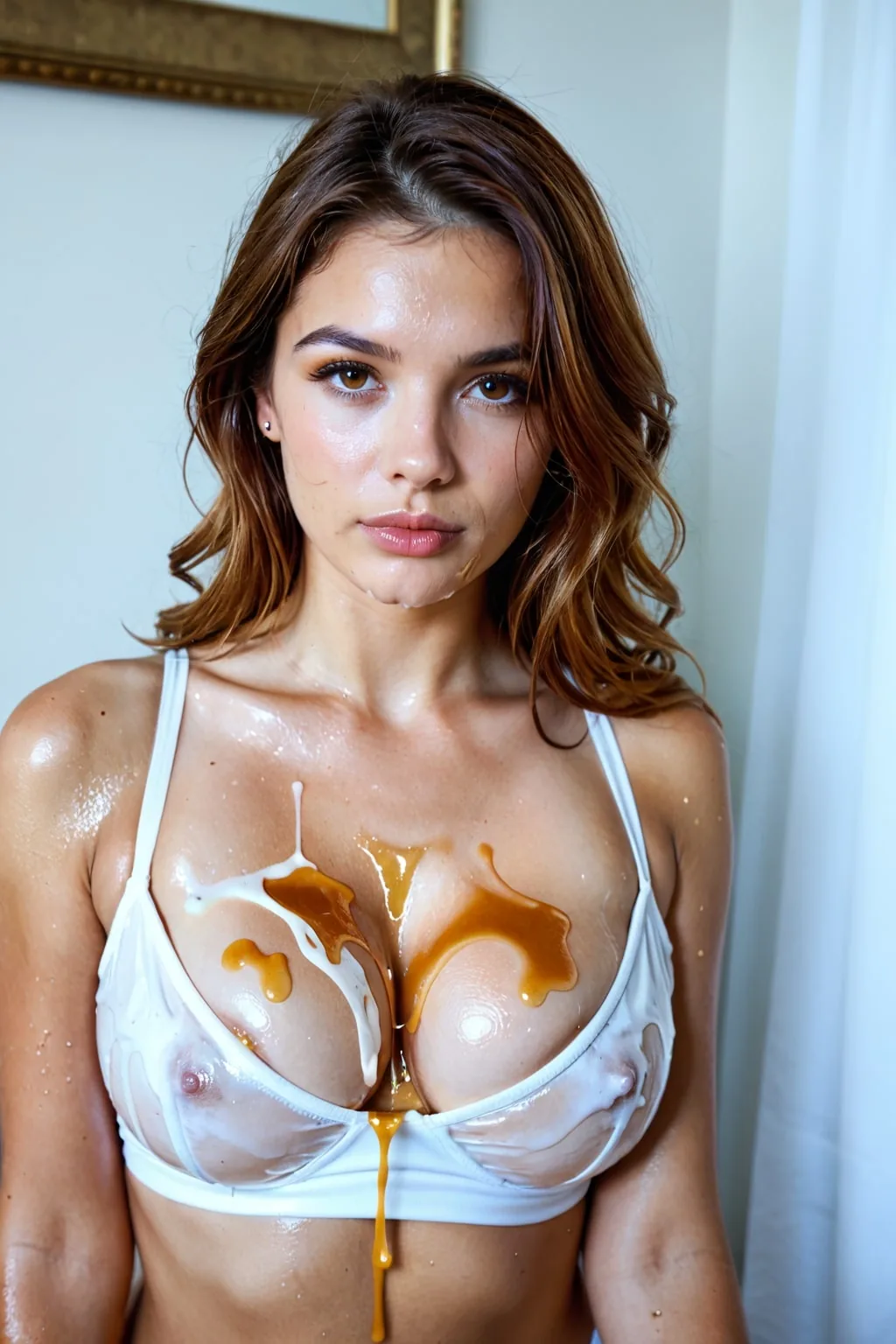
The AI side of the comparison — what SinfulX produces





Try it
Generate your own
No credit card to sign up. Pick a fictional character, choose a category.
Keep Reading
Related Guides
AI Content Marketplace: Discover Studios | SinfulX
Discover the SinfulX AI content marketplace. Browse Studio galleries, search images and videos, and understand public previews and reserved Pass access.
Read guideSell AI Content with a Creator Studio | SinfulX
Learn how to prepare a SinfulX Studio, publish approved AI images and videos, choose public or Pass access, and pay the one-year opening by card.
Read guideStudio Pass: Price, Duration and Access | SinfulX
Understand the SinfulX Studio Pass: its USD price, calendar-month duration, access to one Studio, downloads and the current availability of card checkout.
Read guideCompanion trust guides
Read the trust layer behind the generator
Use these companion pages to inspect the policy, privacy, consent, and licensing claims behind the AI side of this comparison.
Editorial review
SinfulX content pages are reviewed against current product behavior, privacy posture, consent boundaries, and moderation rules. Pages that claim original tests or data require supporting notes before publication.
Trust and safety
SinfulX is for adults only and does not support deepfakes, real-person targeting, celebrity prompts, face swaps, or undress workflows. Read the trust, safety, consent, and age policy.