- Intent
- Character consistency guide
- Characters
- Fictional adults
- Privacy
- Private by default
- Signup
- No card
AI-use disclosure
Sample media on this page is AI-created fictional adult content from the SinfulX pipeline, not real performers.
Trust and safety
SinfulX is for adults only. Outputs are fictional AI-generated adult content. The platform does not support deepfakes, real-person targeting, celebrity prompts, face swap, or undress workflows. Respect consent and local laws.
Same face, every render — no card to sign up
Pick a character once, carry her across every scene. No credit card.
No credit card · Private gallery · Fictional characters only
One face, every category, no drift
Most AI generators produce a different person every time you change the prompt, the seed, or the scene. After three or four renders of "the same character" you are looking at a small family of near-cousins, not one consistent identity. The fix is not better prompting. The fix is moving identity out of the prompt entirely and into a per-character weight layer that loads on top of the base diffusion model.
SinfulX runs that weight layer as a character LoRA. Each entry on the model roster is paired with its own LoRA file, trained on a curated face-and-body reference set. When you select the character, the LoRA is injected into the ComfyUI workflow alongside trigger words from the character profile. Face geometry, body proportions, and skin tone come from the LoRA. Outfit, pose, and lighting come from the category scenarios. The two layers never collide.
LoRA-anchored, not prompt-anchored
Pick a character once, keep her across every render
Each SinfulX character is a locked LoRA. Selection loads identity priors directly into the diffusion pipeline. VIZ tokens, no credit card.
What consistent AI character generation means in practice
A consistent AI character is one whose identifying features survive across multiple diffusion runs. The features that matter most are facial geometry (jaw width, chin point, cheekbone position, eye spacing, nose bridge), body proportions (shoulder-to-hip ratio, torso length, limb scale), and surface attributes (skin tone, hair color and density, eye color). When all three layers persist, an outside viewer can scroll through twelve renders and recognize the same person without being prompted.
The trick is that diffusion models, including Stable Diffusion XL, FLUX, and the various Wan video stacks, do not have a built-in concept of "this specific person." They sample from a learned distribution that satisfies the prompt. Two diffusion runs from "blonde woman, age 25, blue eyes, full body" produce two different blonde women in their twenties, even with identical seeds, because tiny shifts in conditioning move the sampler to a different point in the latent space. To get one specific identity to persist, you have to add a layer that constrains the sampler beyond the text prompt.
That layer can be a textual inversion token, a DreamBooth fine-tune, an IP-Adapter reference, or a LoRA. SinfulX uses LoRA because it gives clean identity preservation without bloating the base model and without leaking into unrelated prompts. The character LoRA is loaded into the ComfyUI diffusion pipeline before the first denoise step and stays active through every subsequent step, so the geometry priors it carries are baked into the noise prediction at every iteration. The full mechanism is documented in the custom AI girlfriend companion guide for users who want to chain a single character across longer narratives.
How identity drifts in generic AI generators
If you have used a vanilla text-to-image tool and tried to render "the same character" twice, you have hit one of these four failure modes. Each one is a real artifact of how diffusion models sample, and each one is what a per-character LoRA is designed to bypass.
Latent-mean convergence. Generic models pull every prompt back toward the densest region of latent space that satisfies the descriptor. Type "asian woman, age 25, dark hair" three times and you get three plausible outputs that quietly cluster around the average face for that descriptor in the training distribution. After five renders, the characters look like sisters even though you specified different hair length, eye color, or pose. The fix is not better adjectives. The fix is conditioning the sampler on a reference identity that pulls away from the mean. That is exactly what the character LoRA does.
Face-geometry drift. Subtle changes in jaw width, chin point, eye spacing, and nose bridge accumulate as you run more diffusion passes. A two-pixel shift in jaw width per render is invisible at first, then unmistakable by render eight. Generic prompt-only consistency relies on the model's ability to reconstruct geometry from descriptors, which works for simple shapes and breaks for human faces. The character LoRA injects geometry priors directly into the cross-attention layers, so the jawline, eye spacing, and bone structure are reasserted at every denoise step rather than reconstructed from text on each pass.
Outfit-anchored identity. The most common prompt-engineering hack for "consistency" is to anchor identity to clothing: "the woman in the red dress, the woman in the red dress, the woman in the red dress." It works for as long as the dress stays in frame. The moment you remove the dress for a nude render, or change to a bikini, or move to a swimsuit at the beach, the model loses the anchor and resamples the face from scratch. Identity collapses to a different person who happens to satisfy the new prompt. SinfulX moves the anchor off clothing and onto the LoRA, so changing wardrobe never touches identity.
Lighting-dependent skin tone. Latent space conflates skin tone with lighting because both contribute to the same RGB channels in training data. Move a character from indoor warm light to outdoor cool daylight and a generic generator shifts skin tone by half a stop, sometimes more. The viewer reads the shift as "different person" rather than "same person, different room." The character LoRA encodes skin tone independently of lighting priors, so a category preset can change the lighting grammar (golden hour, chiaroscuro, soft window) without dragging skin tone with it.
How SinfulX preserves identity at the pipeline level
The mechanism is documented in the codebase and visible in every render. Each character record stores a LoRA configuration as a JSON array on the model row, with one or more entries that map to .safetensors files in the model storage. When you select a character on the roster, the generation service reads the LoRA configs, validates them, and injects them into the ComfyUI workflow before dispatching the job. The workflow modifier sets the LoRA file and strength on the relevant nodes, then runs the standard diffusion graph with that LoRA stack active.
For 30-second video specifically, the pipeline runs twelve five-second segments end to end. The workflow modifier loads the character LoRA into every segment, both on the high-noise pass and the low-noise pass, so the LoRA conditions noise prediction at every step of every segment. That is why frame-to-frame identity holds across a full clip rather than drifting after the first ten seconds, which is the failure point on text-to-video stacks that anchor identity only to the opening frame.
Trigger words live on the character record alongside the LoRA. Every render automatically prepends the character's positive prompt prefix and respects the negative prompt prefix, so users do not have to remember to invoke the LoRA token by hand. Those prefixes plus the LoRA injection together form the full identity stack: trigger tokens activate the LoRA cleanly inside the prompt, and the LoRA itself carries the geometry, body, and skin priors. The same identity stack runs on the image generation flow and the video generation flow, with no separate consistency layer.
How to build a consistent character set in three steps
Pick a LoRA-anchored character
Open the model roster and pick a character. Selection loads her LoRA file plus trigger words into the generation flow. Start with a soft category like portrait or lingerie to confirm the face you actually want before escalating.
Run her across categories
Keep the character locked, switch the category preset. The LoRA stays active so face geometry, body proportions, and skin tone persist while wardrobe, pose, and lighting change. Build a 10-to-20 image set across categories that interest you.
Promote to 30-second video
Pick the strongest still and send it to the video flow. The same LoRA loads across all twelve five-second segments, so the clip starts and ends with the same recognizable character. No frame-to-frame face morph.
What stays locked versus what stays variable
| Attribute | Locked by LoRA | Variable by category preset |
|---|---|---|
| Face geometry (jaw width, chin point, eye spacing) | Locked | - |
| Body proportions and silhouette | Locked | - |
| Skin tone and texture priors | Locked | - |
| Hair color and base length | Locked | Style variation (up, down, wet) |
| Wardrobe | - | Lingerie, nude, cosplay, swimwear |
| Setting and environment | - | Indoor, outdoor, studio, bedroom |
| Pose and scenario | - | 100+ category presets |
| Lighting grammar | - | Soft window, golden hour, chiaroscuro |
Try it
Sign up with no credit card
See photoreal, consent-based AI in action before you commit.
SinfulX character LoRA versus prompt-only, textual inversion, and DreamBooth
Four approaches show up regularly when people try to get character continuity from a diffusion stack. Each has a real failure mode and each has a real cost. The table below maps the trade-offs honestly.
| Approach | Identity carrier | Holds across category change? | Failure mode |
|---|---|---|---|
| SinfulX character LoRA | Per-character LoRA + trigger words | Yes | Roster is curated, no user-trained LoRAs in public flow |
| Prompt-only with seed lock | Text descriptors plus fixed seed | No | Latent-mean convergence after 3-5 renders |
| Textual inversion | Custom embedding token | Partial | Loses fidelity on tight framing and close-ups |
| DreamBooth full fine-tune | Full base-model fine-tune | Yes | Heavy, slow, prone to overfitting |
| IP-Adapter reference | Image embedding from reference photo | Partial | Drifts with strong style prompts, weak on body |
SinfulX picked LoRA because it lands in the right spot on the trade-off curve: clean identity preservation, no overfitting, and no need for users to train anything. The model row stores the LoRA filename, strength model, and strength clip values, and the workflow modifier wires those into the right nodes at dispatch time. Comparable platforms that ship a "consistency" feature without exposing the underlying mechanism are usually doing one of textual inversion or IP-Adapter under the hood, with the partial-hold drawbacks above. The full positioning relative to other adult AI tools is mapped in the best AI porn generator 2026 roundup, and the live character roster that those LoRAs attach to lives on the AI models hub.
Use cases that need persistent character identity
The character-LoRA capability unlocks workflows that fall apart on prompt-only stacks. The most common ones in the SinfulX user base:
- Visual narratives and image series. A 10-to-20 image set featuring the same character moving through escalating scenes. Identity drift on render eight kills the narrative; LoRA anchoring keeps the throughline.
- Multi-clip video series. Several 30-second clips of the same character in different scenarios, edited together. Each clip starts and ends with the same recognizable face because the LoRA runs across every segment.
- Cross-category galleries. Same character through portrait, lingerie, oral, anal, MILF, and cumshot categories. The category preset rotates the scene grammar; the LoRA holds the identity layer.
- Recurring AI companions. Coming back to the same character weeks later and rendering more of her without losing her face. Useful for users building a long-term aesthetic relationship with a single character profile.
- Roleplay and persona work. Putting the same character into varied roles (nurse, student, executive) while keeping her facial geometry stable. Wardrobe and setting flex; identity does not.
For users coming from prompt-engineered Stable Diffusion or Civitai workflows, the value of the locked roster is that you skip the LoRA-training step entirely. Each character has been validated against a reference set and tuned for clean identity output across categories. The full step-by-step workflow is in the how to make AI porn guide, and the broader feature set is mapped on the nude AI generator landing page.
Test it on one character
Pick a character, run her through five categories, see if the face holds
VIZ tokens cover enough renders to confirm LoRA anchoring works the way the page describes. No credit card required.
What this is not
- Not a deepfake or face-swap tool. No real-photo uploads, no celebrity targeting. Every character is fictional or a licensed real performer under explicit consent. The platform does not accept face references for unauthorized identities.
- Not a custom-LoRA training studio. SinfulX runs a curated roster of pre-trained characters. User-trained LoRAs are not exposed in the public flow. The trade-off is faster onboarding and zero training-set moderation work for users.
- Not a prompt-engineering tutorial. The page is about identity preservation as a pipeline feature, not about writing better prompts. Prompt skill helps with scene quality, but it cannot substitute for a per-character LoRA.
- Not a chatbot platform. SinfulX is image and video generation. Persistent character identity here means visual identity, not conversational identity. Companion-style chat layers are out of scope.
Where consistent characters fit in the rest of the catalog
Character continuity is the spine of the SinfulX feature set rather than a standalone product. Once you have picked a LoRA-anchored character, the rest of the catalog is the surface area you can run her through. Start with a soft AI lingerie set to confirm the face you want, escalate to oral, then move into anal, MILF, or cumshot categories, and close with a 30-second video. The same identity carries through the entire arc.
For the broader pricing and free-tier picture, the VIZ tokens page covers cost structure and the public explore feed shows community renders that are opt-in only. Privacy commitments are documented on the privacy-first AI porn page, and the consent framework for licensed real performers is on the licensed AI porn models page. Users who want a deeper companion narrative around one character can read the custom AI girlfriend companion guide, which extends the same LoRA mechanism into long-form workflows.
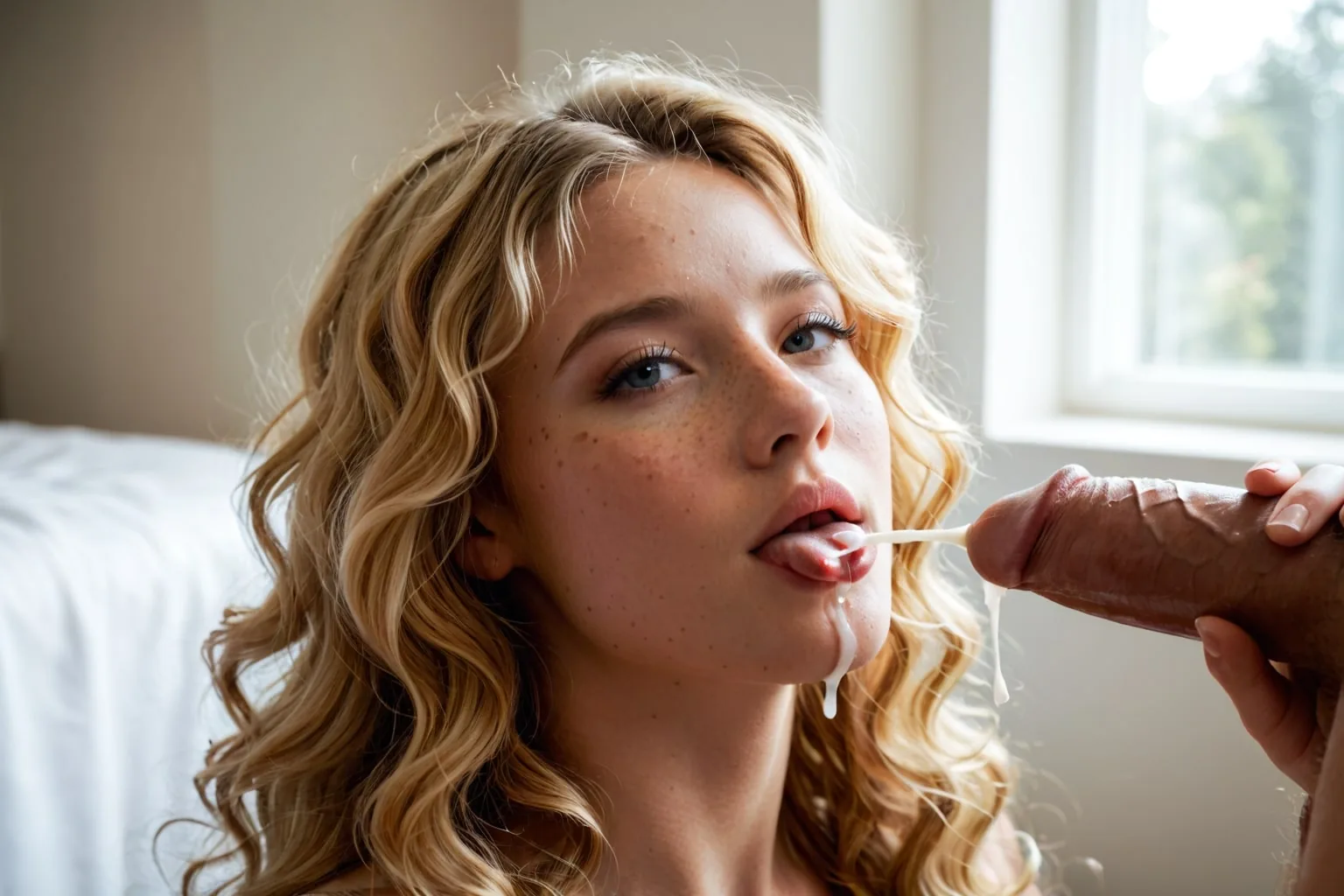
One character, six categories — same face throughout



VIZ tokens
Lock a character, render across categories, watch identity hold
Same LoRA-anchored output the paid tier produces. No credit card. Cancel any time.
Related generators and guides
30-second clips with frame-to-frame LoRA anchoring across all twelve segments.
Browse the character roster20-plus locked-LoRA characters and licensed real performers, listed by aesthetic.
Licensed AI porn modelsReal performers under explicit consent, revenue share on every render.
AI digital twins in pornHow consent-based AI doubles use the same LoRA mechanism.
Custom AI girlfriend companionLong-form workflow built on top of the per-character LoRA.
Best AI porn generator 2026How SinfulX positions against named competitors on identity preservation.
All outputs are fictional AI-generated content of adults, except licensed real performers who have given explicit consent for their likeness to be used. SinfulX does not support deepfakes, undressing, or any unauthorized real-person targeting.
Consistent AI characters - common questions
It means the same face, jaw width, eye spacing, body proportions, skin tone, and hair color survive across multiple renders of the same character, even when you change the scene, outfit, or lighting. On SinfulX, each character is anchored by a dedicated LoRA, so a portrait, a lingerie shot, an oral scene, and a 30-second clip all show the same recognizable person. Identity drift is the failure mode that prompt-only generators hit after three to five renders.
Every SinfulX character ships with a dedicated LoRA, a small fine-tuned weight set trained on a curated face-and-body reference set for that specific character. Selecting the character loads its LoRA into the ComfyUI diffusion pipeline alongside the base model. The LoRA carries facial geometry priors and body-shape priors independently of clothing, lighting, or scene, so swapping the category preset never resamples a new face from the latent mean.
Three failure modes stack. Latent-mean convergence pulls every render of a vague descriptor like "asian woman, age 25" back toward the average face in that region of latent space. Face-geometry drift accumulates across small prompt changes that shift jaw width, chin point, and eye spacing by tiny amounts each render. Outfit-anchored identity collapses the moment you change the dress, because prompt-only consistency leans on clothing as the identity anchor.
Yes, that is the core use case. Pick a character once on the model roster, then run her through portrait, lingerie, oral, anal, cumshot, MILF, or video categories in any order. Each category swaps the scene preset, prompt scaffolding, and pose grammar, but the character LoRA stays loaded, so the face, body, and skin tone persist. You can build a 20-image set across categories and keep one identity throughout.
Yes. The 30-second video pipeline runs the character LoRA across all twelve segments of the workflow, so the LoRA is active on every five-second chunk from the first frame to the final cut. Frame-to-frame identity holds because the LoRA conditions every diffusion pass, not only the opening frame. Generic text-to-video tools without persistent character anchoring drift visibly by the four or five-second mark.
Right now SinfulX runs a curated roster of 20-plus characters with locked LoRAs, plus licensed real performers under explicit consent agreements. Custom user-trained LoRAs are not exposed in the public flow, partly to keep the moderation surface clean and partly because untrained users tend to produce drifty LoRAs. The roster covers the common aesthetic ranges, and licensed real-performer characters are listed on the licensed AI models page.
New accounts receive no credit card to sign up, enough to run a full set of renders with the same character across multiple categories and confirm identity holds. No credit card required to start. The Premium Plan adds priority queueing and 4K video, and one-off VIZ packs cover heavier sets; current plan and pack pricing is itemised on /get-viz-tokens. The free tier produces the same LoRA-anchored output as paid renders, with no quality downgrade.
See it in action
Open the studio yourself
Pick a fictional character, render a scene. No credit card to sign up.
Editorial review
SinfulX content pages are reviewed against current product behavior, privacy posture, consent boundaries, and moderation rules. Pages that claim original tests or data require supporting notes before publication.
Trust and safety
SinfulX is for adults only and does not support deepfakes, real-person targeting, celebrity prompts, face swaps, or undress workflows. Read the trust, safety, consent, and age policy.