AI-use disclosure
SinfulX benefits when users choose fictional AI adult output. The ethical claim here is intentionally narrow: it applies only to fictional adult generation and excludes deepfakes, undress apps, celebrity targeting, and non-consensual imagery.
Trust and safety
SinfulX is for adults only. Outputs are fictional AI-generated adult content. The platform does not support deepfakes, real-person targeting, celebrity prompts, face swap, or undress workflows. Respect consent and local laws.
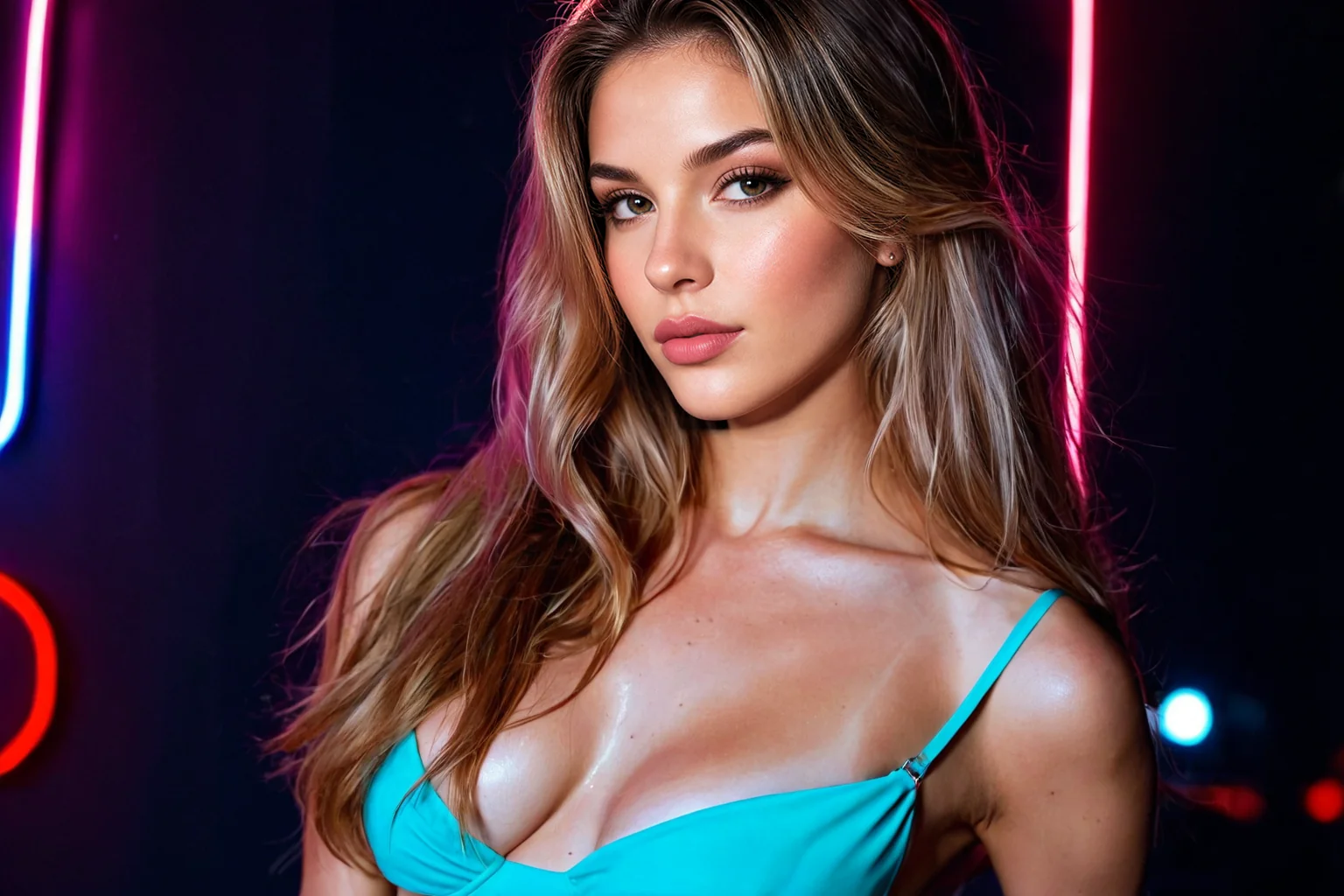
"Ethical AI porn" sounds like an oxymoron until you walk through what the words actually carry. The phrase carries weight only when the output is fully fictional, the platform enforces hard lines against real-person targeting and minors, and the whole consent chain that filmed pornography depends on simply does not exist. This editorial defends the position that fictional AI-generated adult content can be safer and more ethical than filmed pornography, names the counterarguments where critics are right, and ties the argument to the operational guarantees that make the claim real on SinfulX rather than a slogan.
The operational controls behind the safer-AI claim
The ethical claim only holds if the product prevents the failure modes that make AI adult content harmful. SinfulX draws that line in the product flow rather than only in copy: no public photo-upload path for face swapping, fictional personas as the default roster, licensed models separated from synthetic characters, private account galleries, and moderation checks before prompts are sent to diffusion.
What is structurally blocked
- Real-person upload, celebrity targeting, and undress-style prompts do not have a supported generation path.
- Non-roster likeness requests are rejected before generation rather than reviewed after publication.
- Public sharing is optional; private gallery storage is the default destination for user output.
What still needs disclosure
- The training-data debate remains real for open diffusion checkpoints and should not be hand-waved.
- Licensed performer likenesses require written consent, category scope, and a retirement path.
- Synthetic adult output should be labelled as AI-generated wherever users may confuse it with filmed media.
See the output
See what AI-generated photoreal actually looks like
The public gallery is the simplest way to verify the claims in this guide.
Ethical by design — no card to sign up
Try the fictional-only pipeline. Zero consent failures possible.
No credit card · Private gallery · Fictional characters only
How "ethical" applies to adult content
Before defending the category, the frame has to be specified. Ethics in adult content sits on four axes that almost everyone serious about the topic uses, even when they disagree on conclusions. Consent: did everyone whose body or likeness appears agree, on the day, to what was produced? Harm reduction: does the production or distribution chain create avoidable injury to participants or viewers? Autonomy: do adults retain the freedom to make sexual choices without external coercion, including the choice to consume fictional material? And the deepfake distinction: is the output fictional or does it appropriate a real person who never agreed?
The Conversation framed this taxonomy in its 2024 ethics piece on AI-generated pornography, and Hany Farid at UC Berkeley has used a near-identical decomposition in his deepfake research. The Stanford Internet Observatory uses similar axes when it audits platforms. None of these axes is satisfied by the slogan "AI porn is ethical" or the slogan "AI porn is unethical." Each axis points to a specific question that has a specific answer once the production model is clear, and the fictional-only AI subset answers those four questions differently, in measurable ways, than filmed pornography does.
The argument that follows is narrow on purpose. It is not "AI adult content is universally good." It is "fictional AI adult content, on a platform that holds the deepfake line, performs better than filmed pornography on three of the four axes and is at least neutral on the fourth." That is the version of the claim that survives scrutiny, and it is the version the rest of this editorial defends.
Consent: fiction vs filmed performance
Filmed pornography depends on consent happening correctly on the day of the shoot, for every act, by every performer, in a way that holds legally and socially across the lifetime of the recording. Most of the industry, most of the time, handles this. The structural problem is not that consent fails everywhere but that the recording model creates failure modes that no contract eliminates.
The documented categories include on-set coercion, where a performer agrees to one scene on the booking call and is pressured the day-of to agree to more; retroactive regret, where the person who consented at twenty-two cannot withdraw the footage at thirty-two; retention-of-rights abuse, where the studio holds distribution rights the performer believed were limited; and leaks from paywalled tiers to free tube sites, which makes takedown a permanent losing battle. Investigations from the New York Times, the Guardian, and academic work on the adult industry have all documented these patterns. They are not universal, but they are structural to the recording model.
Fictional AI output collapses every one of those failure modes by design. There is no on-set negotiation because there is no set. There is no future regret because there is no real person whose past is recorded. There is no retention-of-rights problem because there are no rights in a likeness that does not belong to anyone. There are no tube-site leaks of identifiable people because no identifiable person is in the output. The argument that this single architectural shift removes a serious, well-documented category of harm is not a marketing claim; it is a description of what the production pipeline does and does not do.
The remaining consent question for fictional AI output is the training-data layer, which is genuinely contested and is addressed in the counterargument H2 below. The point here is narrower: on the layer where filmed pornography concentrates its consent failures, the synthetic alternative has no equivalent failure mode. That is the strongest single claim the ethical AI porn argument rests on, and it stands.
Harm reduction: measurable safety differences
Harm reduction is the second axis, and it splits across performer, viewer, and industry-structure layers. Performer harm is covered above; the rest of this section walks through viewer harm and industry-structure effects, which receive less attention than they should.
Viewer harm is largely a privacy story, and the data is not flattering to the filmed-pornography distribution layer. Mainstream tube sites carry extensive ad-tech tracking, third-party cookies, fingerprinters, and analytics pixels. Past breaches have leaked viewing history at scale; the 2015 Ashley Madison incident outed millions, and smaller adult-data breaches occur every year. Malvertising on adult tube sites is well documented in security research, with drive-by malware and crypto-miner injection routinely surfacing in disclosure reports. None of this is ethical, and none of it is necessary. A serious AI adult platform looks structurally more like a consumer SaaS app than a tube site: account-scoped storage, encryption at rest, discreet billing descriptors, no third-party tracking by default. Whether a given AI operator actually delivers on that depends on the operator, but the architecture allows it where the tube-site model does not.
Industry-structure harm reduction is the third leg and is the one most often misunderstood as utopian. The argument is narrow: when a portion of viewer demand shifts to fictional AI output, the economic pressure on the highest-risk filmed-production niches drops. Less demand, less supply. That is not an argument that all filmed adult production is exploitative or that ethical filmed studios should disappear; many such studios exist and serve audiences that explicitly want documented authenticity. It is an argument that the segment of demand most likely to push toward coercive production has a substitute now, and that substitute reduces the financial incentive to produce the riskiest content. Bernard Marr, MIT Technology Review, and The Conversation have all reported on this dynamic in 2024 and 2025; the directional effect is real even where exact magnitudes remain operator-survey driven rather than audited.
Autonomy and access: who gains, who is protected
The third ethics axis is autonomy: whether adults retain the freedom to make sexual choices, including the choice to consume fictional material that depicts scenarios mainstream studios do not film. The autonomy frame is sometimes dismissed as libertarian boilerplate, which misses the point. The actual question is which audiences gain access to representation when fictional generation is on the table, and which audiences are protected by the substitution.
The MIT Technology Review survey by Leo Herrera (August 26, 2024) documents demand from underrepresented audiences that mainstream studios rarely film for: mature, transgender, disabled, and otherwise atypical viewers. These are not edge demographics; they are tens of millions of adults whose preferences are economically below the threshold for filmed production. Fictional AI output covers those scenarios at near-zero marginal cost per render. That is an autonomy gain on the consumer side and a meaningful one. Rest of World reported in 2025 on adjacent demand-side shifts in markets where filmed production is legally constrained, with similar patterns: fictional output covers what filmed production cannot.
On the protection side, the autonomy axis intersects with performer safety. Where fictional output absorbs demand for the highest-risk niches, the performers most likely to face coercion to film those scenes are the ones who benefit. This is not a substitute for performer rights, contracts, or unionization in filmed production; those continue to matter. It is a complementary effect that reduces the pressure on the people most exposed to coercion. The combined autonomy-and-protection picture is stronger than either layer alone.
The deepfake distinction (the line ethical AI must hold)
The whole argument above collapses if the platform allows real-person targeting. Deepfakes of identifiable real adults without consent are not part of this category; they are image-based abuse, and they are now criminalized in almost every jurisdiction with any content law. Conflating the fictional and the deepfake categories is the single most common mistake in the public conversation, and it is what allows critics to dismiss the entire fictional-only case by pointing at the worst examples of the worst category.
The legal floor is concrete. The TAKE IT DOWN Act (S.146), signed May 19, 2025 and detailed at congress.gov, makes the knowing publication of non-consensual intimate visual depictions a federal crime, including AI-generated deepfakes. The 48-hour platform takedown rule is fully active by May 19, 2026. California passed SB 926, SB 942, and SB 981 in 2024 covering deepfakes, watermarking, and victim takedown rights. The UK Online Safety Act 2023 sits alongside, with criminalization of nudification software requests added under the Data (Use and Access) Act 2025. South Korea amended its sexual crimes law in September 2024 to imprison possession of deepfake pornography for up to three years.
The harm data is also concrete. Sensity AI's 2019 study, repeatedly updated, found that 96 to 99 percent of deepfake video online is non-consensual intimate imagery, and that 99 percent of victims are women. The Almendralejo schoolgirl deepfakes case in Spain (September 2023), the Taylor Swift incident in early 2024, and the documented cases involving Scarlett Johansson, Maisie Williams, and other public figures all sit on the wrong side of this line. Hany Farid at UC Berkeley and the Stanford Internet Observatory have both built audit pipelines specifically for this category; the methodology is widely available and adoption is the operator's responsibility.
What "holding the line" means at the platform layer is specific. It includes a published ban on real-person prompts in terms of service, prompt-layer classifiers that block known public-figure identifiers, output-layer likeness matching against public-figure datasets, a reporting channel that produces a 48-hour takedown when a real person is targeted, and a refusal to accept user-uploaded reference photos for explicit output. SinfulX implements all five. Every persona on the platform is fictional; the models roster is curated rather than derived from real people, and characters such as Isabela, Luna, and Ashley exist only as latent vectors anchored by character LoRA files. The licensed-model program for performers who consent to AI doubles is documented separately on the licensed AI porn models page, and operates under explicit contracts and revenue share rather than scraping or impersonation.
Fictional-only by design
See the consent-first AI adult architecture in practice
Every persona is synthetic. Prompt-layer and output-layer real-person blocks. Encrypted private galleries. VIZ tokens to try on signup.
Where critics are right
Honest engagement with counterarguments is the only credible posture for an ethics piece. The argument above is strong, but it is not airtight; there are three places where serious critics make points that responsible operators cannot dismiss.
Training-data consent. Stable Diffusion was trained on the LAION-5B image corpus, which contained copyrighted images that no rightsholder explicitly licensed. FLUX, Wan 2.2, and most other open-weight diffusion models inherited similar training-set provenance. The downstream-output ethics may be defensible (fictional characters, no identifiable target), but the upstream-training ethics are genuinely contested. Litigation is ongoing in the US and the EU. The operator-level response, applied consistently by trust-led platforms, is fictional-only output policies plus prompt-layer identity blocks, which addresses the downstream harm even when the training-data debate remains open. That is a partial answer, not a complete one, and pretending otherwise would be dishonest.
Parasocial harm and substitution dynamics. The MIT Technology Review piece raised the concern, and academic work in the Computers in Human Behavior literature has documented related patterns: when generated companions become a substitute for human relationships rather than a complement, harm to the user can be real. This is not unique to AI adult content; the same pattern shows up in social media use, gaming, and parasocial creator economies. It is also not a reason to ban the category. The responsible-operator response is to design products as on-demand creative tools rather than relationship surrogates, to surface usage patterns rather than maximize engagement at all costs, and to publish honest disclosure about what the product is and is not. SinfulX builds toward the creative-tool framing rather than the companion-replacement framing; the custom AI girlfriend companion page documents that posture.
Regulatory gaps. The TAKE IT DOWN Act, the EU AI Act, the UK Online Safety Act, and the California SB cluster set a real floor, but the floor has gaps. Operators outside the major jurisdictions can publish material that would be illegal in the US or EU and remain accessible via VPN. Watermarking standards under EU AI Act Article 50 are still phasing in through August 2, 2026. Age verification under the UK regime depends on platform compliance, and Ofcom has already fined Itai Tech, AVS Group, and 4chan for inadequate checks. These are real gaps. The honest position is that responsible fictional output is possible inside the regulated set of operators and is not currently guaranteed across the long tail of weekend-built tools. Concentration of audience onto trust-led operators is the structural fix, and it is happening, but it is not finished.
None of these three counterarguments collapse the case. They do qualify it. The defensible claim is that fictional AI output, on a platform that holds the deepfake line and addresses the three counterarguments above explicitly, performs better than filmed pornography on consent, harm reduction, and autonomy. The version that ignores counterarguments is not defensible; this one is.
How SinfulX operationalizes the ethics frame
An ethics argument that does not connect to specific platform behavior is just rhetoric. The five commitments below are what the frame actually looks like at the operational layer on SinfulX, and they are the same commitments any reader should require of any platform that wants to claim the ethical AI label.
Fictional-only personas. Every character on the models roster is a synthetic identity anchored by a character LoRA file rather than derived from any real person. The consistent AI characters page covers the technical mechanism. Personas such as Isabela, Luna, Ashley, and Capri have stable faces across renders because the model holds their features stable, not because a real person is photographed.
Prompt-layer real-person blocks. Real-name and real-likeness prompts are filtered before they reach the diffusion model. The classifier list is updated against public-figure datasets, and the policy is published in the terms of service rather than buried.
Output-layer likeness moderation. Renders pass through likeness checks against public-figure datasets after generation and before delivery. Matches trigger refusal and ban; the workflow is the operational version of the policy, not just the policy.
Private encrypted galleries. Generations sit in account-scoped private galleries, encrypted at rest. Nothing is public unless the user explicitly chooses to share. Discreet billing descriptors keep credit-card statements unrevealing. The full privacy posture is documented on the privacy-first AI porn page.
Published ethics, not buried policy. The frame this editorial argues for, the deepfake line, the licensed-model program (covered on licensed AI porn models), and the fictional-only output stance are all published rather than tucked behind a terms-of-service URL. Readers can compare the public commitment to actual platform behavior; that comparability is the point.
The contrast frame for readers comparing AI and filmed adult content directly is the dedicated AI porn vs real porn editorial. The broader market context, including the regulatory wave and the creator-economy fallout, is on the rise of AI adult content 2026 survey. Together those three pieces describe the same shift from three different angles: comparison, market, and ethics.
Sources and further reading
Every concrete legal claim, statistic, and named case on this page traces back to one of the sources below. We deliberately favored statute text, regulator pages, peer reference works, and named publications over unsourced industry blog posts.
- S.146 TAKE IT DOWN Act, 119th Congress, signed May 19, 2025. congress.gov/bill/119th-congress/senate-bill/146/text
- TAKE IT DOWN Act, Wikipedia entity reference. en.wikipedia.org/wiki/TAKE_IT_DOWN_Act
- Article 50, EU AI Act. Transparency obligations for synthetic content and deepfakes. artificialintelligenceact.eu/article/50
- Online Safety Act 2023, Wikipedia, with Ofcom enforcement actions. en.wikipedia.org/wiki/Online_Safety_Act_2023
- California SB 926 (non-consensual deepfake imagery), 2024 California Legislature. leginfo.legislature.ca.gov
- Sensity AI report on deepfake intimate imagery (96 to 99 percent figure). sensity.ai/reports
- Generative AI pornography, Wikipedia. Entity goldmine for cited cases. en.wikipedia.org/wiki/Generative_AI_pornography
- Almendralejo schoolgirl deepfakes case, Wikipedia. en.wikipedia.org/wiki/Almendralejo_deepfake_case
- Hany Farid, UC Berkeley deepfake research and forensics. farid.berkeley.edu
- Stanford Internet Observatory, generative-image-abuse research. cyber.fsi.stanford.edu/io
- The Conversation, AI-generated pornography will disrupt the adult content industry and raise new ethical concerns. theconversation.com
- MIT Technology Review, AI and the future of sex by Leo Herrera, August 26, 2024. technologyreview.com
- Bernard Marr, How AI Is Transforming Porn And Adult Entertainment. bernardmarr.com
- Stable Diffusion, Wikipedia. Release dates and training-data notes for the model class powering most fictional AI adult output. en.wikipedia.org/wiki/Stable_Diffusion
Frequently asked questions about the ethics of AI adult content
Yes, when the output is fully fictional and the platform enforces hard lines against real-person targeting and minors. Ethical AI porn rests on two structural facts: no performer is filmed, and no consent failure can occur on a set that does not exist. Sensity AI documented that 96 to 99 percent of deepfake video is non-consensual intimate imagery; reputable operators block that category at the prompt and moderation layers, which is what keeps the ethics frame intact.
Filmed pornography records human beings, which means consent has to hold every minute of every shoot, and any later regret cannot retroactively delete the footage. Documented industry histories include on-set coercion, retention-of-rights abuse, and leaks to free tube sites. Fictional AI output removes the performer entirely, which collapses that whole class of harm. The remaining ethical work is on the deepfake line and the training-data debate, both of which are addressable at the platform layer.
The TAKE IT DOWN Act, signed May 19, 2025, makes the knowing publication of non-consensual intimate deepfakes a federal crime in the United States and forces a 48-hour platform takedown rule that is fully active by May 19, 2026. It draws a clean legal line between fictional AI adult content and image-based abuse of identifiable real adults. Reputable platforms operationalize that line at the prompt and output-moderation layers; SinfulX bans real-person targeting outright.
No. Deepfakes of identifiable real adults without consent are image-based abuse, not the fictional-only category this page argues for. The TAKE IT DOWN Act, California SB 926, SB 942, SB 981, the UK Online Safety Act 2023, and South Korean amendments enacted in September 2024 criminalize that category. The fictional-only distinction is the entire argument; abandon that line and the case collapses. Hany Farid and the Stanford Internet Observatory have both documented why this line matters.
The harm-reduction case has three legs. First, no real performer is exposed to coercion, regret, or leaks. Second, viewer privacy improves materially when generations stay user-scoped and encrypted, instead of routing through tube-site ad-tech. Third, demand for fictional output reduces the economic pressure on the riskiest corners of filmed production. The Conversation, MIT Technology Review, and Bernard Marr have all reported on these dynamics; the directional effect is real even where exact magnitudes remain debated.
Three places. Training-data consent is genuinely contested because Stable Diffusion was trained on web-scraped images that no rightsholder explicitly licensed. Parasocial harm is real, especially for users who substitute generated companions for human relationships. Regulation still has gaps that operators can exploit if the floor stays low. None of these collapse the case for fictional AI adult content, but ignoring them turns the argument into marketing. Honest engagement is the only credible posture.
Five concrete commitments. Every persona on the models roster is fictional. Real-person targeting is blocked at the prompt layer. Output is moderated for likeness matches against public-figure datasets. Generations sit in private galleries scoped to the account, encrypted at rest, with discreet billing descriptors. The ethics frame is published, not buried. The full posture is documented on the ethical AI adult content page.
Try it
Generate your own
No credit card to sign up. Pick a fictional character, choose a category.
The ethical pipeline in practice — what it produces






Keep Reading
Related Guides
AI Content Marketplace: Discover Studios | SinfulX
Discover the SinfulX AI content marketplace. Browse Studio galleries, search images and videos, and understand public previews and reserved Pass access.
Read guideSell AI Content with a Creator Studio | SinfulX
Learn how to prepare a SinfulX Studio, publish approved AI images and videos, choose public or Pass access, and pay the one-year opening by card.
Read guideStudio Pass: Price, Duration and Access | SinfulX
Understand the SinfulX Studio Pass: its USD price, calendar-month duration, access to one Studio, downloads and the current availability of card checkout.
Read guideCompanion trust guides
Read the trust layer behind the generator
The safer-AI argument depends on privacy, licensing, fictional output, and digital-twin boundaries. These pages document those layers separately.
Try the ethical AI studio
See the fictional-only AI adult studio in practice
No credit card to sign up. Fictional-only personas. Private encrypted galleries. Real-person targeting blocked at every layer.
Editorial review
SinfulX content pages are reviewed against current product behavior, privacy posture, consent boundaries, and moderation rules. Pages that claim original tests or data require supporting notes before publication.
Trust and safety
SinfulX is for adults only and does not support deepfakes, real-person targeting, celebrity prompts, face swaps, or undress workflows. Read the trust, safety, consent, and age policy.